Wrap up: the latest in technology...
By WILLIAM XIE | February 23, 2017Toshiba’s Chairman to Resign after $6.3 Billion Loss

Toshiba’s Chairman to Resign after $6.3 Billion Loss
It is an old wives’ tale that being pregnant with a boy is different than being pregnant with a girl. If a woman is pregnant with a girl, it is rumored she will have a wider stomach, more nausea and overall worse pregnancy symptoms due to a higher level of hormones.

Tissue and organ failure that arises due to injury or other forms of damage is a major health issue and has motivated tremendous interest in the fields of tissue engineering and artificial organ research.

Returning to Brody Atrium after a restful winter break, you might have noticed the absence of the BALAUR Wall. In its place lies a mysterious wooden box with intricate designs carved into its sides. As you approach the box you see that it appears to control the screen in front of it, which displays some video game-like sequence.

One of the most contentious topics in the world today is the use of drones by the U.S. military to target terrorist threats. However, a different kind of drone may help promote agricultural and economic growth along with maintaining wildlife diversity.

Biologists at the National Institutes of Health (NIH) recently discovered that it may take between 55 and 59 percent longer for couples in which both partners are obese to get pregnant.

Early last week, Professor Michael Beer, an associate professor of biomedical engineering at Hopkins, was awarded a $1.8 million grant from the National Institutes of Health (NIH) for his work as part of the Encyclopedia of DNA Elements Consortium (ENCODE), a collaboration of 18 labs striving to catalog all coding and regulatory regions of the human genome.

Your mom places a cockroach-sized pill on the table and tells you to swallow it. You take a deep breath, take a large gulp of water and pop it into your mouth. But no matter what you do, you can’t seem to send the medicine down. Sometimes, it doesn’t even make it past the back of your tongue. Other times, it gets stuck in your throat and causes you to gag.
Marijuana warranted much media and political attention in recent years. Along with increased attention there has been increased consumption, in particular of edible marijuana.

Researchers from the Florida Atlantic University (FAU) have discovered an entirely new population of critically endangered monkeys in one of the most isolated regions on Earth. Utilizing remote sensing cameras and audio recorders, the team is the first to capture footage of the rare, largely unknown monkey population known as the Dryas. The monkey species has long been thought to be solely native to a small area in the Congo basin, a hypothesis that has been recently debunked.

It might be difficult to imagine essentially inanimate objects having a sense of brain and self, but this is virtually the case for viruses. Viruses occupy a gray area. They are generally believed to hover between living and nonliving. Their main purpose for existence is to invade hosts as a sort of intracellular parasite.

At Hopkins, there is a kind of research for everyone, whether it is wet lab research at the Hopkins Hospital, clinical research at the Bloomberg School of Public Health or research through other institutions and study abroad programs. Amidst all of these opportunities, Hopkins also provides research scholarships for students that wish to investigate independent research projects.

A group of international astronomers, led by Sherry Suyu of the Max Planck Institute for Astrophysics, made new and independent measurements of how fast our current universe is expanding. This expansion rate, also known as the Hubble Constant, plays a crucial role in modern astronomy for its ability to help verify our picture of the universe.

Neuroscientists at The Scripps Research Institute (TSRI) recently discovered how serotonin, a brain hormone, can lead to weight loss.
Personality is a multi-faceted quality with numerous possible influencing factors, making it intriguing and yet difficult to measure and study. We are constantly shaped by our experiences and environment.
Anyone who has dieted has heard the myth: To lose weight, “Eat breakfast like a king, lunch like a prince and dinner like a pauper.”
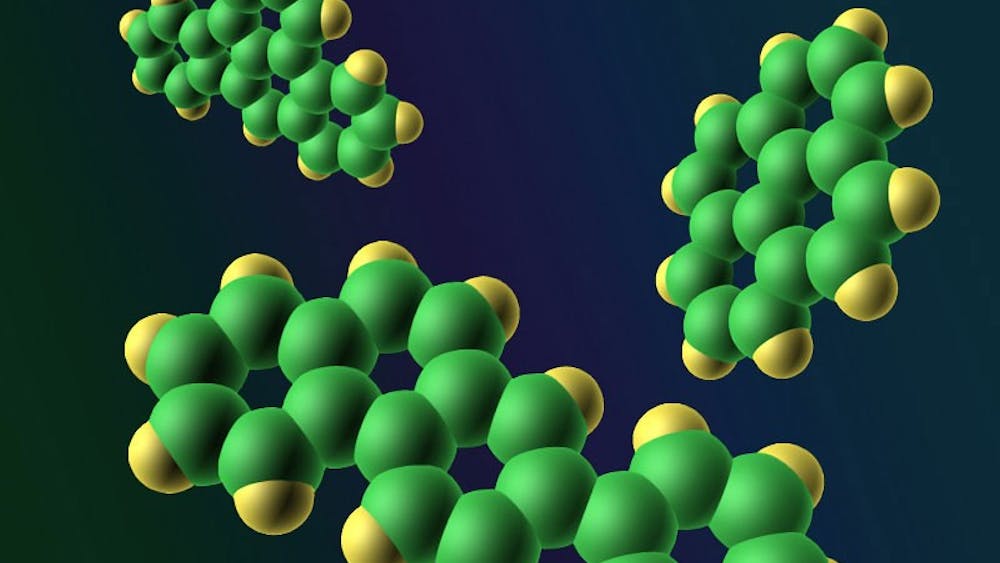
Polycyclic aromatic hydrocarbons (PAHs) are naturally occurring chemicals released by the combustion of organic matter, including wood, coal, oil and gasoline. As a result of increased biofuel consumption in recent years, PAHs have become major pollutants in the atmosphere and 15 PAHs have been identified as carcinogens.
Tesla Motors, Inc. rebranded as Tesla, Inc.

A recent clinical study conducted by the charity Pancreatic Cancer UK showed that a combination of two chemotherapy drugs helped to extend survival time for pancreatic cancer patients. A separate research study showed an increase in survival rate for patients suffering from lung cancer. Pancreatic cancer has the worst survival rate among the commonest forms of cancer, while lung cancer has the second worst survival rate.