Science news in review: March 5
By KAIYUAN DU | March 5, 2023This week, we'll take a closer look at some of the most exciting scientific developments and technology updates. From space explorations to the genome of grapes, this week has it all.
This week, we'll take a closer look at some of the most exciting scientific developments and technology updates. From space explorations to the genome of grapes, this week has it all.
While spring is about to come, this winter's abnormal fluctuations in temperatures are hard to ignore.
As we reach the end of February, let’s recap some of the biggest headlines of the week. This week featured some big discoveries about a new layer of the Earth, fungal plants replacing common building materials, surprising massive early galaxies and advances in quantum computing.
Macy Early, Dr. Lydia Pecker and other researchers at Hopkins recently found a higher risk for severe maternal mortality (SMM) among patients with sickle cell disease (SCD) than those without. The study also identified a racial disparity; Black SCD patients had a 10% higher SMM. Their results were published in Jama Network Open.
Shihua Chen had a polished answer ready when asked why she wanted to be a doctor in an interview with The News-Letter. After all, she had already prepared for her medical school interviews this past fall. Chen first explained how her father’s doctorate in chemistry encouraged her love of science when she was young, but she became interested in the human mind and behavior as she got older.
The American Association for the Advancement of Science (AAAS), the largest general scientific society and publisher of Science, recently named 505 AAAS Fellows to the 2022 class. Among them, 10 Hopkins professors were elected. The AAAS Fellowship has been awarded annually since 1874 and recognizes scientific and social achievements in advancing the field of science.
After three years of round-the-clock work, the Hopkins Coronavirus Research Center (CRC) announced that it will no longer collect and report data on the COVID-19 pandemic on March 10. This decision comes after consistent declines in state-level pandemic data reporting and the federal government’s increased data capabilities.
Earlier this month, President Joe Biden delivered his State of the Union Address, noting that there is a still lot more to do for climate change reform. Looking at this remark as a climate change columnist, I recognize there has been some headway in climate change reform, but it seems that President Biden glossed over properly discussing the issue of climate change.
Valentine’s Day may have come and gone but our love of science is as strong as ever. Some of this week’s greatest discoveries include two unique animals, ant-like robots and breakthroughs in the use of acoustic levitation.
Though upcoming midterms might seem overwhelming, it doesn’t hurt to take five minutes to look at the cutting-edge updates in science and technology. This week, the latest research includes Google’s plan for a new artificial intelligence (AI), a discovery of a new type of ice and an innovative way to study mosquitoes.
One piece of research advice I wish I had before starting out: If you plan to be in a wet lab where you’re pipetting or performing any combination of tedious tasks, be sure to have some podcasts ready to binge.
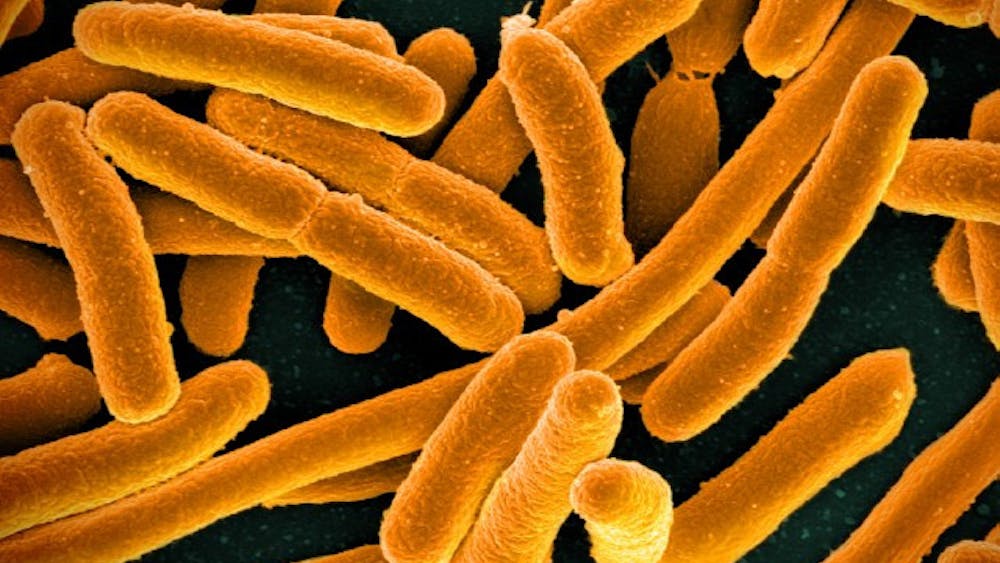
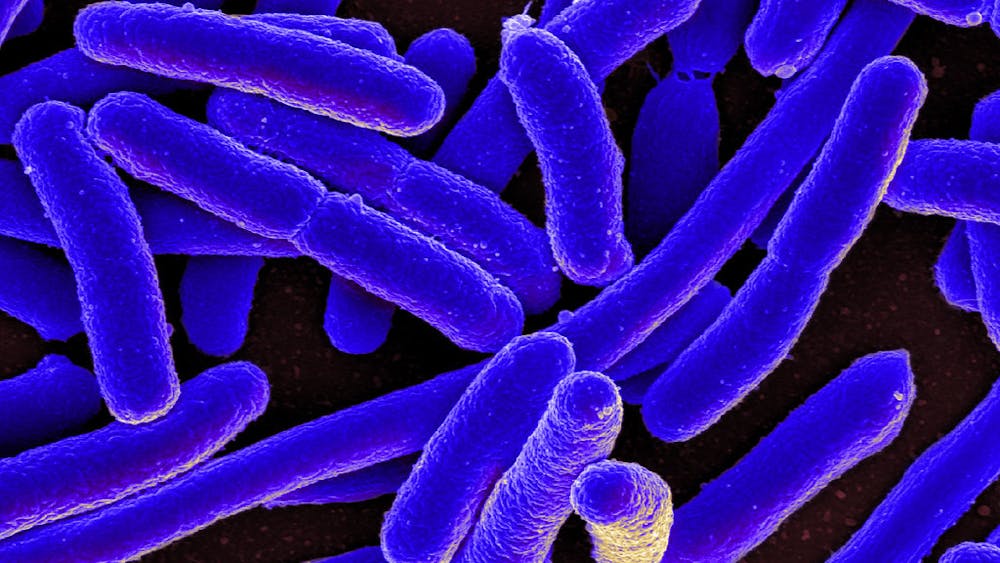
Stephen Fried, an assistant professor in the Department of Chemistry, and his lab recently identified a cohort of proteins in Escherichia coli (E. coli) that cannot refold even in the presence of molecular chaperones, which recognize and undo folding mistakes. Their results, which may have applications in studying aging, were published in the Proceedings of the National Academy of Sciences.
Just more than a year after its launch, the James Webb Space Telescope (JWST) has confirmed the existence of its first exoplanet, discovered by a team of astronomers at the Johns Hopkins University Applied Physics Laboratory (APL). The Earth-sized planet, LHS 475 b, orbits a red dwarf star approximately 41 light years from Earth in the constellation Octans.
While the weather outside is frightful, the warmth of scientific discovery is delightful. This past week has seen various new developments, from novel vaccine technologies to the effect of language learning in polyglots. Take a look at these fascinating discoveries as you read our first print issue of the semester.
Welcome back from winter break! Even though the weather might be cold outside, the science world is still hot with new stories! This week, we have details about the virus causing the spike in egg prices, a change in the Doomsday Clock and the possibility of science slowing down.
What would you do if the island you were living on was sinking? While this is definitely not an easy question to answer, it is a question that those who are living on many small, tropic islands are facing. Inundation is a threat that many islands are now facing due to climate change and rising sea levels.
It’s almost time for finals here at Hopkins! For many students, that means a lot of late-night study sessions at the library pumped with caffeine. In this stressful time, it’s important to understand how students study most effectively to achieve the best results.
As we head into finals season, read our last science news review piece of the semester to learn the biggest science headlines from this past week! This week sees records being broken, new studies on star deaths and innovative food technologies.
As we approach the end of the semester, take a moment to read the latest news in science! News from this past week includes building a new U.S. tribal climate policy, an aquatic dinosaur and the use of technology in both military and police settings.
Only a couple of weeks ago, the 2022 United Nations Climate Change Conference, also known as COP27, convened to discuss major issues around climate change. While these big conversations are great, it is important that smaller conversations on a community or individual scale happen as well. Starting to discuss climate change is undoubtedly difficult.